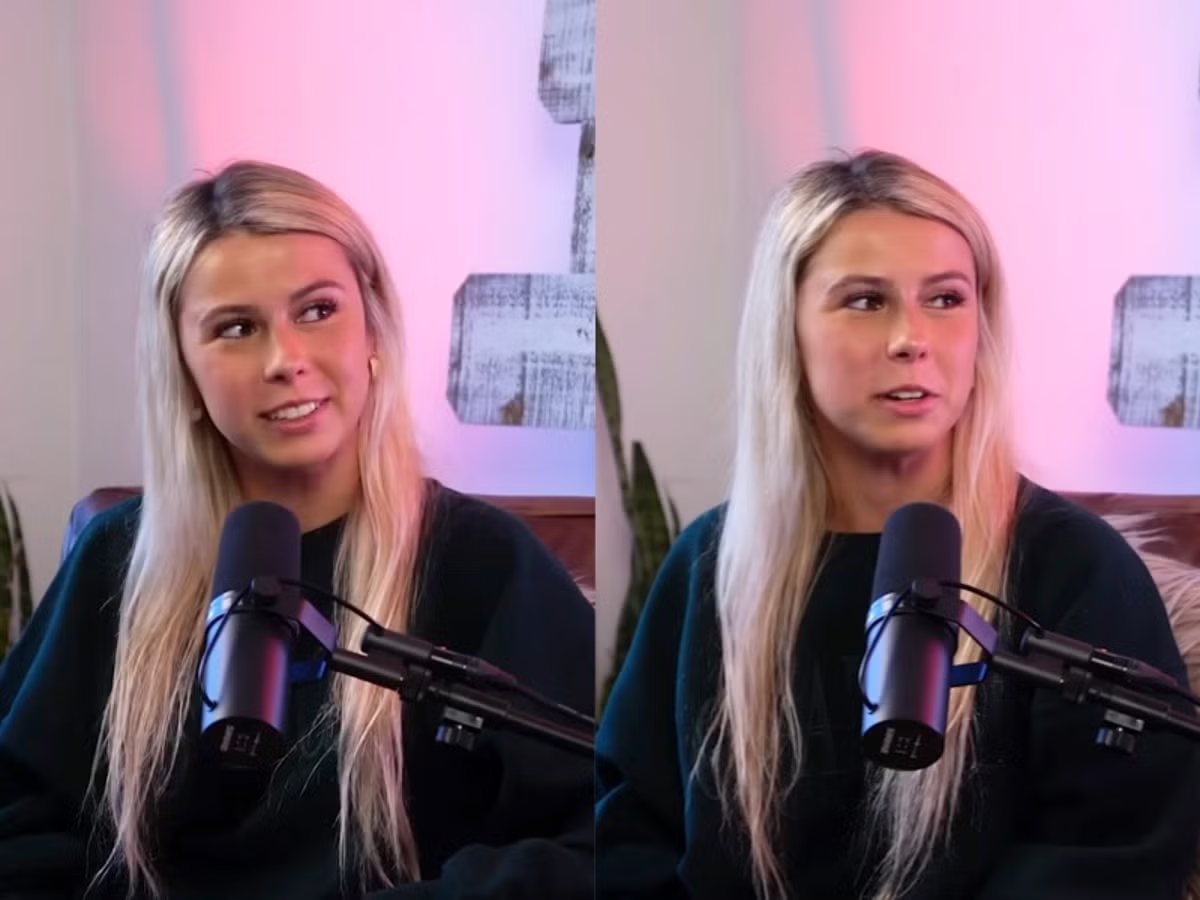
The term “Hawk Tuah Girl” exploded across the internet almost overnight, originating from a brief but wildly memorable clip that circulated on TikTok and other social media platforms. In the viral video, a young woman being interviewed on the street responded to a provocative question with an exaggerated gesture and the now-infamous phrase, “You gotta give it the hawk tuah and spit on it.” Her bold delivery, unexpected confidence, and unapologetic humor struck a chord with audiences, rapidly propelling the clip into meme territory. The phrase “Hawk Tuah Girl” itself mimics the sound of someone preparing to spit—a crude but comedic addition that gave the internet exactly the kind of absurd, catchy moment it thrives on. With no script, no marketing, and no celebrity push, the “Hawk Tuah Girl” became an unintentional icon of the summer.
Virality, Humor, and Cultural Timing
What made the “Hawk Tuah Girl” go viral was not just what she said, but how and when she said it. Her delivery felt spontaneous, full of character, and unapologetically confident. It arrived at a time when social media audiences were craving humor that felt raw and unfiltered, standing out amid overly produced content and scripted influencer culture. The line was instantly meme-able—easily repeatable, surprising, and packed with attitude. Within hours, people were remixing the clip, creating musical parodies, GIFs, and reaction videos. TikTok, Twitter, Instagram Reels, and Reddit all helped fuel the fire, transforming what was a one-second quip into a cultural punchline. The virality also tapped into Gen Z’s appreciation for irony and exaggerated humor, where the weirder and more unexpected the content, the better its chances of taking off.
Identity Revealed From Mystery to Meme Star
For days after the clip went viral, social media buzzed with questions: Who was the “Hawk Tuah Girl”? Was she a comedian, a paid actress, or just a quick-witted stranger caught in the moment? Eventually, her identity was revealed as Haliey Welch, a young woman from Tennessee who had no previous experience with internet fame. What surprised many was how quickly Welch embraced her newfound visibility. Rather than shying away or distancing herself from the meme, she leaned into the experience with humility and humor. Interviews followed, along with merchandise, shoutouts from influencers, and fan pages dedicated to the catchphrase.
Reactions from the Public and Social Commentary
The public response to the “Hawk Tuah Girl” has been wide-ranging, from laughter and support to critique and satire. Many embraced the clip as harmless fun—an absurd, comedic moment that brought people joy. Memes, duets, and reenactments flooded TikTok and Instagram, with users dressing up as Welch or using her catchphrase to react to unrelated scenarios. Some hailed her as a comedic genius, praising her timing and confidence. However, others questioned whether the attention was deserved, or whether the viral moment perpetuated stereotypes about women, the South, or social class. These criticisms sparked online debates about meme ethics and the boundaries of comedy, once again proving that viral fame is rarely straightforward.
Meme Monetization and Merchandising
As with many viral figures, the “Hawk Tuah Girl” moment soon turned into a monetization opportunity. Merchandising quickly followed the meme’s viral rise, with t-shirts, mugs, and stickers plastered with the phrase “Hawk Tuah Girl” or stylized versions of Haliey Welch’s likeness. What made this different from previous viral merch moments was Welch’s willingness to collaborate with creators and maintain some control over her image. Rather than being exploited by third-party sellers, she and her team reportedly worked to ensure that any products reflected her humor and benefitted her directly. This move sparked a wider conversation about how people who become memes can (and should) reclaim their image and capitalize on the moment instead of being pushed aside while others profit.
The Power and Pitfalls of Accidental Fame
For Welch, the sudden surge of popularity came with both opportunities and pressures. On the one hand, the meme status opened doors for podcast appearances, interview spots, influencer collaborations, and a massive online following. On the other hand, being thrust into the public eye carries an emotional toll—one that many viral stars aren’t prepared for. Welch faced scrutiny over past posts, was dissected by internet commentators, and quickly became the subject of think pieces about meme culture. The intensity of attention, both positive and negative, reflects how quickly the internet can shift from celebration to criticism.
Generational Humor and Why It Resonated
The “Hawk Tuah Girl” meme resonates so strongly with Gen Z and younger millennials because it represents the kind of chaotic, offbeat humor that dominates platforms like TikTok. It’s weird, it’s loud, it’s borderline nonsensical—but that’s exactly why it works. In an age where memes form part of everyday conversation, Welch’s viral line became a kind of internet shorthand: part flirtation, part absurdity, part comedic performance. Users across platforms mimicked her voice, exaggerated her mannerisms, and even used the line as slang for effort, energy, or wild enthusiasm. In this way, “Hawk Tuah Girl” evolved from a simple soundbite into a symbol of digital era humor—fueled by irony, embraced by community, and completely detached from traditional celebrity culture.
The Media’s Role in Amplifying Viral Moments
While social media platforms like TikTok and Twitter played the largest role in spreading the clip, traditional media quickly jumped in to amplify the phenomenon. News sites, radio shows, and even late-night television picked up the story, with headlines like “Who Is the Hawk Tuah Girl?” or “Why the Internet Is Obsessed with This Bizarre Viral Phrase.” This mainstream coverage gave the meme even more traction, introducing it to audiences who might not have encountered it online. Interviews with Welch added human context to what initially seemed like a throwaway moment. The media’s involvement underscores a key dynamic in viral culture: once something starts gaining momentum online, legacy outlets often race to document the trend, thereby helping it last longer and grow even more widespread.
The Legacy of Hawk Tuah Girl Meme or Movement?
While many viral stars fade after a few weeks, the “Hawk Tuah Girl” seems to have carved out a longer-lasting legacy—at least for now. Her catchphrase is still quoted, parodied, and shared in new contexts months after the original video was posted. More importantly, Welch has shown signs of turning her moment into something more enduring. Whether it leads to comedic work, brand collaborations, or a full-time influencer career, she has options and an audience ready to follow. Her case also contributes to the growing discussion about meme stars being more than punchlines—they are real people, often with real charisma and potential that just happened to be unlocked through an unexpected viral moment.
Conclusion
The “Hawk Tuah Girl” moment is more than just a viral video—it’s a cultural case study in how humor, timing, and authenticity can catapult an ordinary person into extraordinary internet fame. Haliey Welch’s journey from anonymous street interviewee to beloved meme icon highlights the unpredictable nature of virality in the age of TikTok and Instagram Reels. It also illustrates how today’s digital audience values humor that feels spontaneous and unpolished, celebrating the weird and wonderful over the perfectly curated. In a landscape where internet fame is fleeting, Welch has turned a single phrase into a lasting brand—and perhaps more importantly, she’s done it on her own terms.
You May Also Read: 6X Classroom
